Introduction
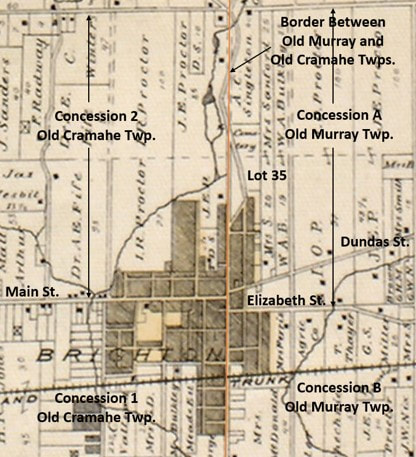
The intersection of Main, Young and Prince Edward Streets in Brighton straddles the original border between the old Cramahe and Murray Townships. The map at right is from the Belden County Atlas of 1878 and shows the structure of lots and concessions around which the village of Brighton grew.
The orange line from top to bottom runs down Young Street, Prince Edward and then Cedar Street to Presqu’ile Bay. That is the old border between Murray and Cramahe which was eliminated on January 1, 1852 when Brighton Township was created.
The end result is that the lot and concession numbering is different on either side of this line. The numbering system was created differently for each of the townships. Sometimes we might feel that this was done specifically to mess with researchers two hundred years later, but it was the result of the process at the time.
The orange line from top to bottom runs down Young Street, Prince Edward and then Cedar Street to Presqu’ile Bay. That is the old border between Murray and Cramahe which was eliminated on January 1, 1852 when Brighton Township was created.
The end result is that the lot and concession numbering is different on either side of this line. The numbering system was created differently for each of the townships. Sometimes we might feel that this was done specifically to mess with researchers two hundred years later, but it was the result of the process at the time.
For our purposes, all of this results in the north-east part of Brighton Village being in lot 35 of concession A. This lot has its southern boundary along Elizabeth Street and its northern boundary at the Telephone Road south of the 401. The west boundary is Prince Edward and Young Streets and the east is Terry Fox Drive and Pinnacle Street North. The piece of Lot 35 we are dealing with is in its far south-west corner, on the east side of Prince Edward Street, south of Dundas Street and towards Elizabeth Street.
The Patent from the Crown for all 200 acres of lot 35, concession A was granted to Ann Marsh on November 11, 1825. Ann McArthur (1771-1862) was 54 years of age when she obtained lot 35, but was already a prominent person in the community at the border of Murray and Cramahe Townships. She was born at Kinderhook, Columbia County, New York, near the Hudson River. Her family moved north as Loyalists and settled in Thurlow Township, at what was initially called Singleton’s corners.
Ann married Captain George Singleton in 1788, after he had been at the mouth of Singleton’s Creek for a few years conducting an active trading system with the Indigenous people to the north. Ann gave birth to a son, John, in January 1789. However, tragedy struck the family when George Singleton died of a fever while on the annual trip to Montreal. Each year they took the furs they had collected to Montreal and obtain more trade goods. George Singleton died near Bath and the other travelers came back home.
In 1791, the widow Ann Singleton married Alexander Chisholm, who had been an army buddy of George Singleton as well as a partner in trade. Ann would have five children with Alexander Chisholm as both Ann and Alexander parleyed their significant land grants into prosperity for their family. Alexander Chisholm wrote petitions begging for a grant of land at the mouth of what would become the Moira River, but his efforts were thwarted by the rise to prominence of John Walden Meyers who had strong supporters in high places due to his work as a spy for the British during the American War of Independence.
The Patent from the Crown for all 200 acres of lot 35, concession A was granted to Ann Marsh on November 11, 1825. Ann McArthur (1771-1862) was 54 years of age when she obtained lot 35, but was already a prominent person in the community at the border of Murray and Cramahe Townships. She was born at Kinderhook, Columbia County, New York, near the Hudson River. Her family moved north as Loyalists and settled in Thurlow Township, at what was initially called Singleton’s corners.
Ann married Captain George Singleton in 1788, after he had been at the mouth of Singleton’s Creek for a few years conducting an active trading system with the Indigenous people to the north. Ann gave birth to a son, John, in January 1789. However, tragedy struck the family when George Singleton died of a fever while on the annual trip to Montreal. Each year they took the furs they had collected to Montreal and obtain more trade goods. George Singleton died near Bath and the other travelers came back home.
In 1791, the widow Ann Singleton married Alexander Chisholm, who had been an army buddy of George Singleton as well as a partner in trade. Ann would have five children with Alexander Chisholm as both Ann and Alexander parleyed their significant land grants into prosperity for their family. Alexander Chisholm wrote petitions begging for a grant of land at the mouth of what would become the Moira River, but his efforts were thwarted by the rise to prominence of John Walden Meyers who had strong supporters in high places due to his work as a spy for the British during the American War of Independence.
Alexander and Ann Chisholm decided to try elsewhere and moved to the north shore of Presqu’ile Bay. They built saw and grist mills at the mouth of the creek flowing into the bay, which later would be called Butler Creek. They were squatters on the land which had been designated as government reserve, but they did manage to obtain a lease. Alexander Chisholm died in 1808 without achieving his dream of creating a town to carry his name, but Ann would carry on with the busy job of managing all the family’s land grants – and founding the town of Brighton.
Around 1810, Ann married Cyrus Marsh, who was a son of Mathias Marsh, part of the large family of Col. William Marsh, a prominent loyalist. Until her death around 1862, Ann Mash would be engaged in many land transactions in the immediate area of Brighton. The grant of Lot 35 solidified the position of her son, John Singleton and herself as founders of the new village of Brighton when it was established in 1831. The initial home for this family may have been south of Dundas Street and west of Alice Street, but a significant brick house that the family built later remains today on Singleton Street to the north.
Around 1810, Ann married Cyrus Marsh, who was a son of Mathias Marsh, part of the large family of Col. William Marsh, a prominent loyalist. Until her death around 1862, Ann Mash would be engaged in many land transactions in the immediate area of Brighton. The grant of Lot 35 solidified the position of her son, John Singleton and herself as founders of the new village of Brighton when it was established in 1831. The initial home for this family may have been south of Dundas Street and west of Alice Street, but a significant brick house that the family built later remains today on Singleton Street to the north.
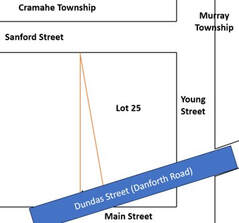
We should remember that the intersection of Main, Young and Prince Edward Streets was part of the original Danforth Road, built from York to Kingston in 1799 and 1800. This sketch shows that the Danforth Road edged north-east off our Main Street in order to follow Dundas Street to the settlement at Smithfield.
Not long after the war of 1812, the new York Road took a different route, turning right and going east on Elizabeth Street and directly to Trent Port. As this new route became habitual for locals, Dundas Street would experience less through traffic, leaving local traffic on the road to Smithfield.
Not long after the war of 1812, the new York Road took a different route, turning right and going east on Elizabeth Street and directly to Trent Port. As this new route became habitual for locals, Dundas Street would experience less through traffic, leaving local traffic on the road to Smithfield.
In spite of this change, the corner of Dundas and Young and the corner of Dundas and Prince Edward were popular locations for stores from an early date. Proctor and Squier, that partnership between John Edward Proctor and Abijah Squier, operated a store at 1 Young Street from as early as 1844.
The establishment of Brighton Village in 1831 led to the sub-division of properties along the main roads and streets of the village in order to provide smaller village lots for local residents to build homes or businesses.
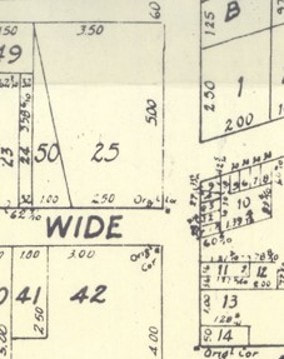
The map at right is a segment of the Brighton Plan of 1866. We can see the original lots around the main intersection. It is interesting to note that, according to this map in 1866, only the corner of Dundas and Prince Edward had been sub-divided. The other three corners still show their original large lots.
The establishment of Brighton Village in 1831 led to the sub-division of properties along the main roads and streets of the village in order to provide smaller village lots for local residents to build homes or businesses.
The map at right is a segment of the Brighton Plan of 1866. We can see the original lots around the main intersection. It is interesting to note that, according to this map in 1866, only the corner of Dundas and Prince Edward had been sub-divided. The other three corners still show their original large lots.
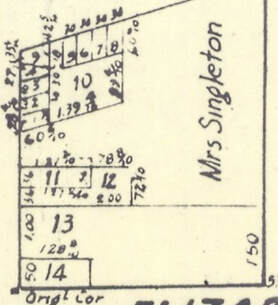
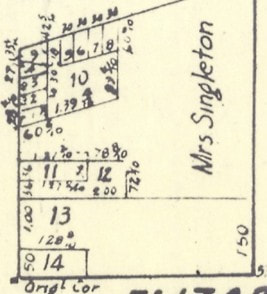
This may help to explain why the lots at the corner of Dundas and Prince Edward Streets were divided and numbered as they were. The map below from the 1866 Brighton Plan shows that the corner was sub-divided with lots 1 to 4 along Prince Edward Street, going from south to north, and then lots 5 to 8 along the south side of Dundas Street. Lot 9 is right on the corner and lot 10 takes up the larger area at the back of the other smaller lots that have street frontage.
We can see that Margaet Singleton, referred to on the map as “Mrs. Singleton” still owned large parts of township lot 35 which had not yet been sub-divided. She was the wife of John Singleton and she would be heavily engaged in real estate transactions.
We can see that Margaet Singleton, referred to on the map as “Mrs. Singleton” still owned large parts of township lot 35 which had not yet been sub-divided. She was the wife of John Singleton and she would be heavily engaged in real estate transactions.
The land registry records show a lot of back-and-forth between members of the Singleton family, but it is clear that, in the early 1850s, Margaret Singleton had ownership of the west side of lot 35 at the south end, where the town of Brighton developed. Around this time, we start to see transactions to sell one quarter of an acre or some such measurement. Unfortunately, the records normally don’t provide an exact description of the land. We have to identify the purchaser of the property and determine if that person did business at certain place in later years. It can be difficult to do anything but guess in this time period, because of the limited documentation.
The Proctor Block – 1 to 10 Prince Edward Street
The records do make it clear that the first business of any longevity on the corner of Dundas and Prince Edward Streets was operated by Matthew Ferris (1832-1893) who was born in Ireland and had come to Canada around 1850 with his brother James and sister Mary Ann. It did not take Matthew Ferris long to make a mark in the community because in 1860 he married Sarah Elizabeth Proctor, a daughter of Isaac Chamberlain Proctor, and a sister of John Edward Proctor. The two brothers-in-law were men cut from the same cloth, both engaged in real estate and merchandizing, often collaborating with each other on projects and deals.
In 1864, Matthew Ferris purchased lots 4 and 9 at the corner of Dundas and Prince Edward Streets. He had a building built near the corner that took up most of lots 9 and 4. This was a substantial building were Mr. Ferris established a dry goods store. His brother, James, had decided to try his luck in Campbellford and very quickly, he became a major force in the development of that town twenty miles north of Brighton. He was the post master in 1860 and by 1868, was Reeve and then a member of parliament. Ferris Park, the recreational area south of the town, was named for him.
Over several decades, Matthew Ferris would thrive in business in Brighton. He and his wife would also invest in other small business properties, especially across Dundas Street in what was originally Lot 1 on the corner of Dundas at Young Street. It had been sub-divided to provided numerous small shops and offices and many vendors and merchants passed through this building over time.
During the 1870s, there were several land transactions where Isaac Oscar Proctor, a brother of Sarah Ferris, acquired parts of lots 4 and 9 that Matthew Ferris had not purchased. Then there are transactions where Matthew Ferris sells part of the property to Isaac Oscar Proctor, and then he sells immediately to Sarah. In the meantime, Isaac O. Proctor was planning to do something large in this area of town.
In 1864, Matthew Ferris purchased lots 4 and 9 at the corner of Dundas and Prince Edward Streets. He had a building built near the corner that took up most of lots 9 and 4. This was a substantial building were Mr. Ferris established a dry goods store. His brother, James, had decided to try his luck in Campbellford and very quickly, he became a major force in the development of that town twenty miles north of Brighton. He was the post master in 1860 and by 1868, was Reeve and then a member of parliament. Ferris Park, the recreational area south of the town, was named for him.
Over several decades, Matthew Ferris would thrive in business in Brighton. He and his wife would also invest in other small business properties, especially across Dundas Street in what was originally Lot 1 on the corner of Dundas at Young Street. It had been sub-divided to provided numerous small shops and offices and many vendors and merchants passed through this building over time.
During the 1870s, there were several land transactions where Isaac Oscar Proctor, a brother of Sarah Ferris, acquired parts of lots 4 and 9 that Matthew Ferris had not purchased. Then there are transactions where Matthew Ferris sells part of the property to Isaac Oscar Proctor, and then he sells immediately to Sarah. In the meantime, Isaac O. Proctor was planning to do something large in this area of town.
Sarah Elizabeth (Proctor) Ferris died in August 1882 and her will granted all of her holdings to her husband. Then, in October 1889, Mr. Ferris sold his property to Isaac Oscar Proctor. He remained in business until January of 1891 when a fire destroyed his dry goods store and damaged the building considerably. Matthew Ferris was almost sixty years of age at this point and chose not to continue with his business after the fire. He died in Cobourg in July 1893.
Now, the space on the east side of Prince Edward Street and south of Dundas was available for development. As it worked out, Isaac Oscar Proctor had, over time, purchased lots 9, 4, 3, 2 and 1 and was able to move ahead with his project to build the Proctor Block. We will see that he also had acquired the land immediately to the south which was still part of lot 35, concession A.
Now, the space on the east side of Prince Edward Street and south of Dundas was available for development. As it worked out, Isaac Oscar Proctor had, over time, purchased lots 9, 4, 3, 2 and 1 and was able to move ahead with his project to build the Proctor Block. We will see that he also had acquired the land immediately to the south which was still part of lot 35, concession A.
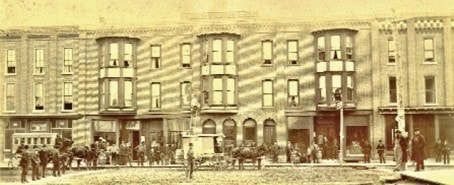
A large business block was built in 1894 which primarily housed the Proctor Hotel toward the south and middle, with a part for other businesses to the north up to the Dundas Street corner. In modern terms, the Proctor Block occupied street numbers 1 through 10 on Prince Edward Street. Upstairs was a large hall and meeting rooms with the entrance through an external stairway.
Here is a photo of the Proctor Hotel when it was new. The sign above is not very clear in this picture, but, on close observation, it does say “Proctor Hotel”.
This hotel was in competition for many years with the Central Hotel up Main Street which was destroyed in the huge fire in 1921. Patrons had plenty of choice in accommodation, dining rooms and livery services. Business was very good!
Here is a photo of the Proctor Hotel when it was new. The sign above is not very clear in this picture, but, on close observation, it does say “Proctor Hotel”.
This hotel was in competition for many years with the Central Hotel up Main Street which was destroyed in the huge fire in 1921. Patrons had plenty of choice in accommodation, dining rooms and livery services. Business was very good!
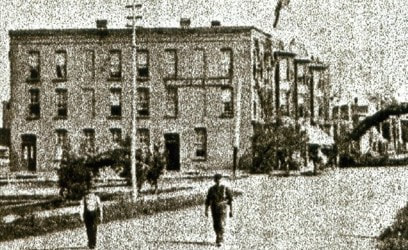
Another view of the Proctor Block is shown at right, this one taken around the same time but from the vantage point of Young Street to the north. It shows the full depth of the building to the east as well as its dominance of the streetscape, especially since there was no building at this time on the north corner of Dundas and Young, due to a fire.
It is interesting to note that there is a large blank space in the land records for addresses 1 through 10 Prince Edward Street between the early 1890s and the 1960s. That is the time period when the Proctor family owned this property.
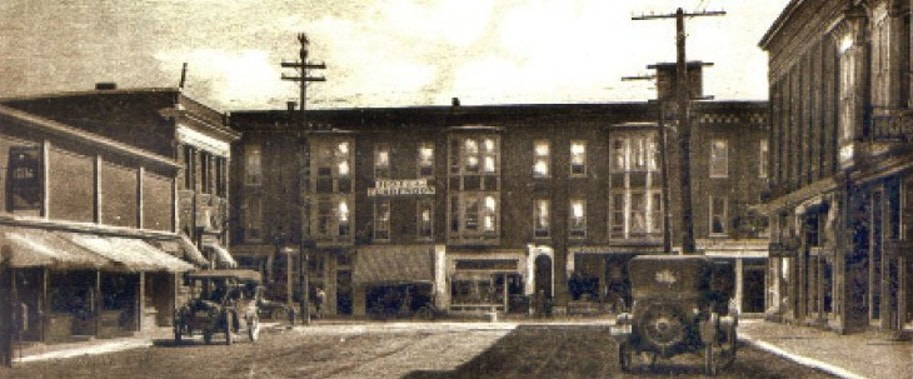
On October 16, 1911, the Proctor Hotel turned into the Clarendon Hotel. Repairs and upgrades were done and new furniture installed. The stables were around on Dundas Street as was the entrance to the lobby. The picture below is from about that time, as it shows “Hotel Clarendon” on the front of the building.
It is interesting to note that there is a large blank space in the land records for addresses 1 through 10 Prince Edward Street between the early 1890s and the 1960s. That is the time period when the Proctor family owned this property.
On October 16, 1911, the Proctor Hotel turned into the Clarendon Hotel. Repairs and upgrades were done and new furniture installed. The stables were around on Dundas Street as was the entrance to the lobby. The picture below is from about that time, as it shows “Hotel Clarendon” on the front of the building.
There was a close call on a Saturday evening in April 1913 when a fire was detected out back, later determined to have started in kept in the stables. Fire fighting methods and equipment had improved a lot in the town and they were able to save the hotel block and buildings.
The Brighton Ensign of September 29, 1922 made note of another change. "Clarendon Hotel Changes Hands: Mr. G. T. Goheen has sold his hotel business in Brighton to Mr. Harrison, who has had a good many years experience in managing a hotel very satisfactorily".
More changes came in December 1923. “The former sample room, one door south, has become a bar room for soft drinks and refreshments, two fine sample rooms fitted up back of the rotunda with ample space for traveling salesmen, also remodelled the dining room.”
In July of 1925, further changes took place. “The Clarendon Hotel has been greatly improved, both inside and out. A large fireplace has been built in the rotunda, which will do much to make the winter evening’s cheery and pleasant also new furniture. A canopy was also was put on the Hotel.”
The Brighton Ensign of September 29, 1922 made note of another change. "Clarendon Hotel Changes Hands: Mr. G. T. Goheen has sold his hotel business in Brighton to Mr. Harrison, who has had a good many years experience in managing a hotel very satisfactorily".
More changes came in December 1923. “The former sample room, one door south, has become a bar room for soft drinks and refreshments, two fine sample rooms fitted up back of the rotunda with ample space for traveling salesmen, also remodelled the dining room.”
In July of 1925, further changes took place. “The Clarendon Hotel has been greatly improved, both inside and out. A large fireplace has been built in the rotunda, which will do much to make the winter evening’s cheery and pleasant also new furniture. A canopy was also was put on the Hotel.”
Then, in January of 1926, the hotel had a new tenant at 7 Prince Edward Street. “For some time negotiations have been under way by Messrs. Jury and Lovell for the purchase of the business of the late F.E. Marshall and the business was taken over by them this week. They have taken a ten-year lease of the two stores directly south of the Clarendon Hotel and are remodelling them, putting in modern fixtures, show cases and other conveniences. While repairs to the new store is going on, business will be conducted in one of the smaller stores next to Wright’s Garage.”
At the north end of the block, Mr. Brown had established a popular bakery on the ground floor. This was the source of another fire scare for the folks at the hotel. “What threatened at one time to be a serious fire was discovered in the garage back of Brown’s Bakery, corner of Young and Dundas Street, at about 11:55 last Saturday. An alarm was sent, but by the time the firemen were able to get a line of hose in play, dense clouds of heavy black smoke was rolling across the street towards the Clarendon Hotel. The building is of frame construction, covered with tin and it was a nasty fire to fight. The fire was noticed by two young boys who ran into the bakery and informed Mr. Brown that his garage was on fire. The garage is attached to the bakery and main building and both were filled with smoke. The woodwork and walls will have to be done over the interior of the garage is badly charred.”
The Clarendon Hotel was definitely the place to go in Brighton in October 1932. “At the Clarendon Hotel the lobby is unusually attractive, spacious and cheerful, the rooms comfortably and tastefully furnished. The food is the best our excellent markets afford. The price for rooms is $1.00 per night and meals 50 cents. The special Sunday Chicken or Turkey dinner is so unusual for the price.”
At the north end of the block, Mr. Brown had established a popular bakery on the ground floor. This was the source of another fire scare for the folks at the hotel. “What threatened at one time to be a serious fire was discovered in the garage back of Brown’s Bakery, corner of Young and Dundas Street, at about 11:55 last Saturday. An alarm was sent, but by the time the firemen were able to get a line of hose in play, dense clouds of heavy black smoke was rolling across the street towards the Clarendon Hotel. The building is of frame construction, covered with tin and it was a nasty fire to fight. The fire was noticed by two young boys who ran into the bakery and informed Mr. Brown that his garage was on fire. The garage is attached to the bakery and main building and both were filled with smoke. The woodwork and walls will have to be done over the interior of the garage is badly charred.”
The Clarendon Hotel was definitely the place to go in Brighton in October 1932. “At the Clarendon Hotel the lobby is unusually attractive, spacious and cheerful, the rooms comfortably and tastefully furnished. The food is the best our excellent markets afford. The price for rooms is $1.00 per night and meals 50 cents. The special Sunday Chicken or Turkey dinner is so unusual for the price.”
On the other hand, it was not always quiet at the Clarendon Hotel, as this news item in 1933 suggests. “At six forty-five on Saturday morning the sleep of the occupants of the Clarendon Hotel was rudely woken when a large Metropolitan Transport truck and trailer charged into the front of Ed. A. Simmons drug store. Skidding on the pavement the driver was unable to make the right-hand turn and the transport hit the centre window of the store and caved it in before coming to a stop.”
More changes were made to the hotel in 1936. “Mr. D. C. Harrison, the host of the Clarendon Hotel has been doing considerable changing and renovating at his “Home on the Road.” The greatest change he has made is in moving his dining room downstairs, where it is conveniently located and where the best of food and service are given the guests.”
In October of 1944, we see this. “Monday was a gala day in Brighton, with the opening of the new moving picture theatre and a new restaurant both taking place. Mrs. A. Harrison, who manages the local hotel, The Clarendon, opened her new, modern restaurant on the main floor of the hotel, where the dinning room used to be.”
More changes were made to the hotel in 1936. “Mr. D. C. Harrison, the host of the Clarendon Hotel has been doing considerable changing and renovating at his “Home on the Road.” The greatest change he has made is in moving his dining room downstairs, where it is conveniently located and where the best of food and service are given the guests.”
In October of 1944, we see this. “Monday was a gala day in Brighton, with the opening of the new moving picture theatre and a new restaurant both taking place. Mrs. A. Harrison, who manages the local hotel, The Clarendon, opened her new, modern restaurant on the main floor of the hotel, where the dinning room used to be.”
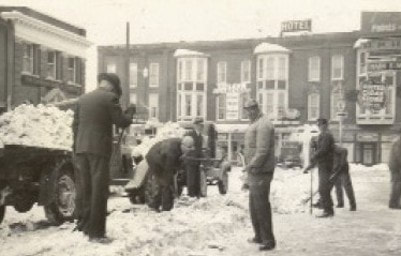
On a completely different note, February 1945 brought a major snow fall. “The snow banks on Brighton’s Main Street, developed into huge piles in no time at all yesterday afternoon. More than a hundred men, seven teams with sleighs and five trucks all donated their service to the worthy project and tons of snow was removed. The council and Chamber of Commerce thank not only the laborers themselves but Mrs. A. J. Harrison of the Clarendon and Chew Canna restaurants for donating refreshments and the women who served the workers. By special request of the shovellers, a repeat performance is to be staged next Wednesday afternoon, to complete a good job now well started.”
In December of 1946 this information appeared in the newspaper: “The Clarendon Hotel in Brighton has changed hands. Mrs. A. J. Harrison has sold the business to Harry H. Baily and Mr. & Mrs. Leslie Baker.” The land transaction was dated November 30, 1946 and showed that Mona L. Proctor leased the property to Harry H. Bailey. The seller was Mona Louisa (Wright) Proctor, the widow of Charles Proctor who was a son of John Edward Proctor and had been manager of the Standard Bank for a time. Mona was living in Alberta at that time.
A year later, the news was good. “In all, the new appearance of the Clarendon Hotel in Brighton is a great credit to the owner, Mr. Harry Bailey, who came here from Brantford highly recommended as a hotel man of experience and discernment. Mr. Bailey and Mr. & Mrs. Leslie Baker, who came to Brighton from Brantford with him are to be congratulated upon the success of their arduous task and those who take advantage of the invitation of the management to inspect the hotel this week-end will be more than repaid for their interest.”
However, by May of 1950, the Clarendon was for sale. The land records show that the lease was surrendered to Mona Proctor in June that year. The hotel was closed and the premises evacuated. Then, in May 1960, “A few months ago a transport crashed through the front of the old Clarendon Hotel. Plywood was erected to cover the hole. This week the plywood came down to reveal the new modern store fronts.”
A new radio and TV store had been established in 1947 at 31 Main Street by Arthur Cyril Boyce, who was know as Cy. In May 1955, Mr. Boyce moved his store to 4 Prince Edward Street, the ground floor of the Proctor Block, where the old Clarendon Hotel had been. In 1961, he expanded into 3 Prince Edward Street to make a much larger store, as the newspaper reported. “The new addition has been completely renovated and redecorated in attractive colours and new lighting installed. The new premises contain a new record bar and stereo and hi-fi shop, where customers can come in and pick and choose new records, trying them out before buying. The main store accommodated Mr. Boyce’s TV and electrical appliance business.”
A year later, the news was good. “In all, the new appearance of the Clarendon Hotel in Brighton is a great credit to the owner, Mr. Harry Bailey, who came here from Brantford highly recommended as a hotel man of experience and discernment. Mr. Bailey and Mr. & Mrs. Leslie Baker, who came to Brighton from Brantford with him are to be congratulated upon the success of their arduous task and those who take advantage of the invitation of the management to inspect the hotel this week-end will be more than repaid for their interest.”
However, by May of 1950, the Clarendon was for sale. The land records show that the lease was surrendered to Mona Proctor in June that year. The hotel was closed and the premises evacuated. Then, in May 1960, “A few months ago a transport crashed through the front of the old Clarendon Hotel. Plywood was erected to cover the hole. This week the plywood came down to reveal the new modern store fronts.”
A new radio and TV store had been established in 1947 at 31 Main Street by Arthur Cyril Boyce, who was know as Cy. In May 1955, Mr. Boyce moved his store to 4 Prince Edward Street, the ground floor of the Proctor Block, where the old Clarendon Hotel had been. In 1961, he expanded into 3 Prince Edward Street to make a much larger store, as the newspaper reported. “The new addition has been completely renovated and redecorated in attractive colours and new lighting installed. The new premises contain a new record bar and stereo and hi-fi shop, where customers can come in and pick and choose new records, trying them out before buying. The main store accommodated Mr. Boyce’s TV and electrical appliance business.”
The land records show a transaction in 1967 when the Proctor family sold part of Lot 4 to Arthur C. Boyce. He would be in business here until 1974. Residents might recall that Jim’s Pizza Restaurant and Tavern was at 1 Prince Edward Street from 1978 to 1992. Then, from December 1992, Rosie’s Family Restaurant served the town.
The spaces we call #5 and #7 Prince Edward Street were part of the Proctor Block but would later be combined and separate several times over the years as many different vendors and merchants took up residence for short periods of time. From 1890 to 1897, Duncan C. Cummings had a barber shop and then Clarence Clouston continued cutting hair, along with adding a pool room.
In 1919, the meat business took over #5, with proprietors Joseph Langdon, Robert Whitton and J. H. Yake. In 1927, Jury & Lovell opened their drug store and combined #5 and #7 before moving to 12 Main St. Then, in 1926, this became a Rexall drug store with the addition of a soda fountain which was very popular with the teens. Mr. Simmons of Trenton hired pharmacist Mark Scanlon as the manager.
The Standard Bank had been located at 7 Prince Edward Street from 1883 until it moved to its new building at 2 Main Street in 1905. After that, there was a series of merchants, such as W. N. Davidson’s tailor shop, Lewis Purdy & Son, then daughter Eva Maud Purdy with her bonnet shop. More recently, #7 and 5 were combined and there have been real estate brokers, as well as Chamber of Commerce offices here.
Many different stores and vendors have been located on the street here in recent decades. Residents of Brighton may recall Mrs. B’s lovely store which provided relief for our sweet tooth. That store took up both #5 and #7. As of this writing in 2025, the sign out front says “Wish etc…”.
The spaces we call #5 and #7 Prince Edward Street were part of the Proctor Block but would later be combined and separate several times over the years as many different vendors and merchants took up residence for short periods of time. From 1890 to 1897, Duncan C. Cummings had a barber shop and then Clarence Clouston continued cutting hair, along with adding a pool room.
In 1919, the meat business took over #5, with proprietors Joseph Langdon, Robert Whitton and J. H. Yake. In 1927, Jury & Lovell opened their drug store and combined #5 and #7 before moving to 12 Main St. Then, in 1926, this became a Rexall drug store with the addition of a soda fountain which was very popular with the teens. Mr. Simmons of Trenton hired pharmacist Mark Scanlon as the manager.
The Standard Bank had been located at 7 Prince Edward Street from 1883 until it moved to its new building at 2 Main Street in 1905. After that, there was a series of merchants, such as W. N. Davidson’s tailor shop, Lewis Purdy & Son, then daughter Eva Maud Purdy with her bonnet shop. More recently, #7 and 5 were combined and there have been real estate brokers, as well as Chamber of Commerce offices here.
Many different stores and vendors have been located on the street here in recent decades. Residents of Brighton may recall Mrs. B’s lovely store which provided relief for our sweet tooth. That store took up both #5 and #7. As of this writing in 2025, the sign out front says “Wish etc…”.
17 Prince Edward Street – Lot 1 – The Duncan Block
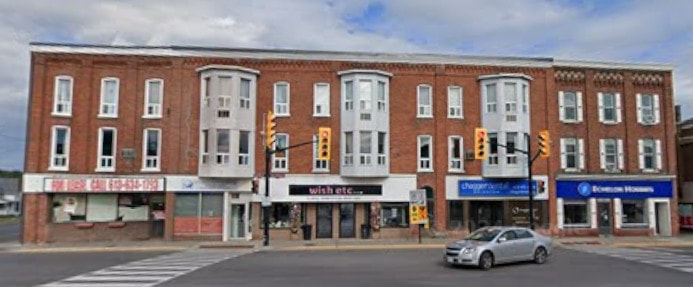
The building at the address 17 Prince Edward Street is at the south end of the Proctor Block. It is very similar in size and shape, but the brick and the windows are different. It is apparent that this is a separate building. Any indication of a date for the construction of this building is not available in documents at this time, so we have to speculate.
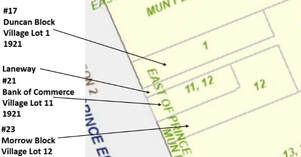
This building is also on the north side of the laneway and this helps us be sure that it is located in lot 1 as shown on this segment of modern OnLand.ca map of the area. We need to recall that the lots that came out of the sub-division of the corner of Prince Edward and Dundas Streets were numbered from Lot 1 to 10 going north and around the corner.
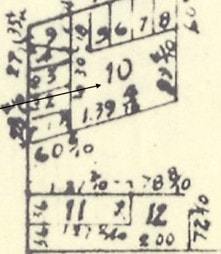
The modern arrangement may call the land on the north side of the laneway lot 1, but that does not equate to the original lot 1 as shown on this segment of map from the Brighton Plan of 1866. The land where lot 1 is today was still part of the larger Singleton property in Concession A, lot 35, and not yet part of the sub-division process.
That means we need to find land records for the old lot 35, concession A, but under the umbrella of Brighton Village. This is found in Book 013 which is labelled “East of Prince Edward Street”. This is a large area and we must search through the 185 pages to find items that appear to represent the land at lot 1, as we see it today.
That means we need to find land records for the old lot 35, concession A, but under the umbrella of Brighton Village. This is found in Book 013 which is labelled “East of Prince Edward Street”. This is a large area and we must search through the 185 pages to find items that appear to represent the land at lot 1, as we see it today.
The History of Brighton Businesses shows that a lawyer named Philip S. Staddon had an office at 17 Prince Edward Street in the 1980s. If we key on his name, we can see land records for him in Book 013. Then we can trace back through the records for items related to this land. Sometimes we just look for the person who sold it to him, but also, we need to look at the description. While we can’t rely on it, there was some consistency in wording for the description of certain land. In this case, it may include something about the “name Mrs. Singleton” and/or “East of Prince Edward Street”.
Using these methods, we can piece together the ownership of lot 1, or 17 Prince Edward Street. A big help was the mortgage record in 1971 for Arthur C. Boyce which had one of those detailed descriptions. When I traced the details, it outlined lot 1 perfectly. In this way, I knew I was on the right track. Then I could trace back through the Proctor and then Singleton involvement, to the Patent for the whole lot to Ann Marsh.
The question still remains as to the date of the construction of the building at 17 Prince Edward Street. The Proctor Block was built in 1894 and we might expect that the separate building to the south might have been built at the same time or soon afterward. Isaac O. Proctor acquired the property from Lenora E. Singleton in April of 1893, so they could have planned the construction of both buildings at the same time. The pictures from the early years of the Proctor Block show this structure to the south from an early point. In the records, the building at 17 Prince Edward Street was often called the Duncan Block. The fact that it was given a different name in public discussion confirms that it was a separate building from the Proctor Block.
Using these methods, we can piece together the ownership of lot 1, or 17 Prince Edward Street. A big help was the mortgage record in 1971 for Arthur C. Boyce which had one of those detailed descriptions. When I traced the details, it outlined lot 1 perfectly. In this way, I knew I was on the right track. Then I could trace back through the Proctor and then Singleton involvement, to the Patent for the whole lot to Ann Marsh.
The question still remains as to the date of the construction of the building at 17 Prince Edward Street. The Proctor Block was built in 1894 and we might expect that the separate building to the south might have been built at the same time or soon afterward. Isaac O. Proctor acquired the property from Lenora E. Singleton in April of 1893, so they could have planned the construction of both buildings at the same time. The pictures from the early years of the Proctor Block show this structure to the south from an early point. In the records, the building at 17 Prince Edward Street was often called the Duncan Block. The fact that it was given a different name in public discussion confirms that it was a separate building from the Proctor Block.
Let’s run through the ownership path for this property. The Patent from the Crown for all 200 acres of lot 35, concession A, Murray Township went to Ann Marsh, who can be considered the matriarch of Brighton. In 1834, 50 acres of the west half of the west half of lot 35 went to John Singleton. About thirty years later, in 1862, Margaret, widow of John Singleton, passed “part of the south-west part” of lot 35 to her daughter, Leonora E. Singleton.
Then, in 1893, Leonora E. Singleton sold the “part marked with name Mrs. Singleton, East of Prince Edward St. with area of alley way” to Isaac O. Proctor. The Proctor Block was built the next year, and possibly the building at 17 Prince Edward Street at the same time. The Proctor family held this property a long time, managing it as a commercial building with several spaces to rent or lease.
Records show that Joshua Kemp had a grocery store here in the 1890s, then James A. Brinkman was the proprietor of “Palace Boot and Shoe Store”. This fellow was from Bruce County and had married Mary Albert Hutcheson of Brighton Township in 1894. They soon moved to the Borough of Queens, New York City where he sold boots and shoes and other dry goods and Mary works as a manicurist. From 1908 to 1913, William James Lear Jr. operated a store called The Bee Hive Store. Carey Farrow and then George Mutton had butcher shops.
From 1919 to 1937, Calrence Clouston ran a Neilson’s ice cream shop and began the billiards parlour at this location. The pool hall proved to be a good business and it was continued here with Harvey Davern, Mr. Marden, Cecil A. Dillon, Melville H. Middleton and Mr. Dale. In 1965, Clayton Farrow ran the pool room but moved to 21 Prince Edward Street (the old bank building) in 1969. After this, there was a parade of different vendors and offices located in this commercial building. We also might mention that Lighthouse Books was located at 17 Prince Edward Street from 1995 to 2001 before moving to Main Street.
The children of Charles Proctor finally sold lot 1 in 1967, to Arthur C. Boyce, who had the radio and TV shop in the space to the north. In 1971, Mr. Boyce took a mortgage on this property and that is where we see the detailed description of lot 1 which was so useful.
Then, in 1893, Leonora E. Singleton sold the “part marked with name Mrs. Singleton, East of Prince Edward St. with area of alley way” to Isaac O. Proctor. The Proctor Block was built the next year, and possibly the building at 17 Prince Edward Street at the same time. The Proctor family held this property a long time, managing it as a commercial building with several spaces to rent or lease.
Records show that Joshua Kemp had a grocery store here in the 1890s, then James A. Brinkman was the proprietor of “Palace Boot and Shoe Store”. This fellow was from Bruce County and had married Mary Albert Hutcheson of Brighton Township in 1894. They soon moved to the Borough of Queens, New York City where he sold boots and shoes and other dry goods and Mary works as a manicurist. From 1908 to 1913, William James Lear Jr. operated a store called The Bee Hive Store. Carey Farrow and then George Mutton had butcher shops.
From 1919 to 1937, Calrence Clouston ran a Neilson’s ice cream shop and began the billiards parlour at this location. The pool hall proved to be a good business and it was continued here with Harvey Davern, Mr. Marden, Cecil A. Dillon, Melville H. Middleton and Mr. Dale. In 1965, Clayton Farrow ran the pool room but moved to 21 Prince Edward Street (the old bank building) in 1969. After this, there was a parade of different vendors and offices located in this commercial building. We also might mention that Lighthouse Books was located at 17 Prince Edward Street from 1995 to 2001 before moving to Main Street.
The children of Charles Proctor finally sold lot 1 in 1967, to Arthur C. Boyce, who had the radio and TV shop in the space to the north. In 1971, Mr. Boyce took a mortgage on this property and that is where we see the detailed description of lot 1 which was so useful.
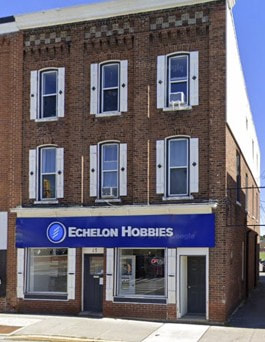
In 1974, Arthur C. Boyce sold lot 1 to Archibald and Meryl Ostrander and they had their travel business at 17 Prince Edward Street. Plan 38R852 was registered in 1975, defining the modern lot 1. A lawyer, Joseph Barlow, took out a lease with the Archibald Ostrander. The property was in the Ostrander family until 1982 when it was sold to a numbered company which was also involved in other properties nearby, especially lot 11 to the south. In 1985, lot 1 was purchased by Philip S. Staddon, who was a lawyer. In 2000 Mr. Staddon sold the property to Robert and Lise Howard.
As of this writing in 2025, the sign on the building says “Echelon Hobbies”.
As of this writing in 2025, the sign on the building says “Echelon Hobbies”.
21 Prince Edward Street – Lot 11 - the Bank
Here is a picture of Prince Edward Street in the early 1900s which shows the Morrow Block at right with the distinctive canopies over the front windows. It is useful to point out that, at this time, there was no building immediately north of the Morrow Block. It was an empty lot. Technically speaking it was lot 11 which is shown on the maps.
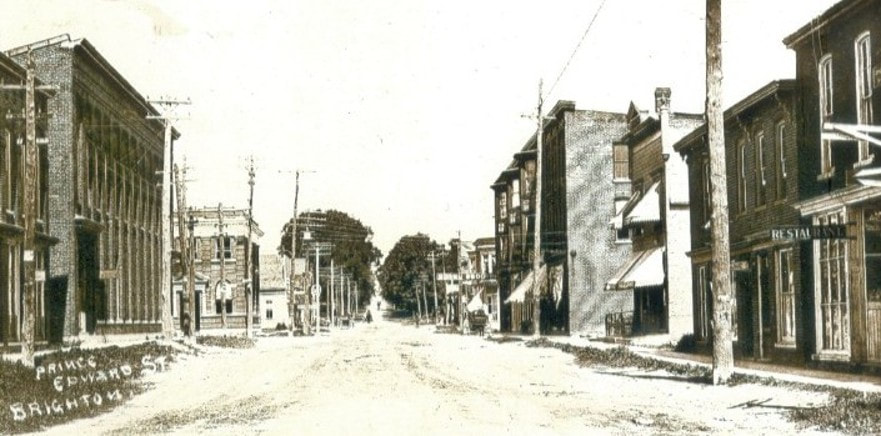
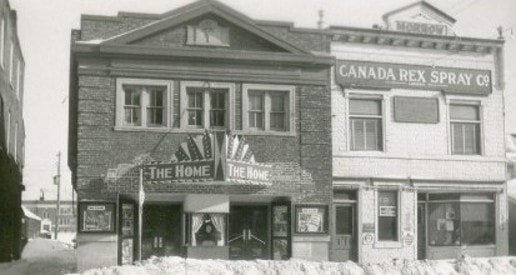
The building that would appear on lot 11 was the Canadian Bank of Commerce, built in 1921, after the location of the bank had been destroyed in the disastrous fire on Main Street earlier that year. In 1928, the Standard Bank and the Canadian Bank of Commerce merged and the building at 2 Main Street became the new home for the Commerce, where the Standard Bank had been.
The building at 21 Prince Edward Street was then occupied by the Royal Bank of Canada. Major upgrades included a safe weighing 6,500 pounds with three compartments and a time lock.
Then #21 took on the role of the Home Theatre where many movie fans sat and ate popcorn from 1944 to 1956.
The Brighton Ensign announced the opening In October of 1944. “Monday was a gala day in Brighton, with the opening of the new moving picture theatre and a new restaurant both taking place. Mrs. A. Harrison, who manages the local hotel, The Clarendon, opened her new, modern restaurant on the main floor of the hotel, where the dinning room used to be.”
This picture from around 1950 shows the Home Theatre with a snow bank in front, the laneway to its north and the old Morrow Bock to the south, occupied by Canada Rex Spray Co.
The building at 21 Prince Edward Street was then occupied by the Royal Bank of Canada. Major upgrades included a safe weighing 6,500 pounds with three compartments and a time lock.
Then #21 took on the role of the Home Theatre where many movie fans sat and ate popcorn from 1944 to 1956.
The Brighton Ensign announced the opening In October of 1944. “Monday was a gala day in Brighton, with the opening of the new moving picture theatre and a new restaurant both taking place. Mrs. A. Harrison, who manages the local hotel, The Clarendon, opened her new, modern restaurant on the main floor of the hotel, where the dinning room used to be.”
This picture from around 1950 shows the Home Theatre with a snow bank in front, the laneway to its north and the old Morrow Bock to the south, occupied by Canada Rex Spray Co.
For another year, it was called the Crown Theatre, but by 1969, Clayton Farrow took over #21 with his billiards tables. This would be “The Pool Hall” while this historian was attending high school at East Northumberland Secondary School. Many of us were instructed by our parents not to darken the doorway of the pool hall, which was considered to be a bad place for kids to hang out. In spite of that, a lot of pool was played, a lot of cigarettes were smoked, and the world did not end.
In 1983, lot 11 was acquired by Ted Mound and he moved his dental practice from 45 Main Street where he had been since 1969. The dental office would be here at 21 Prince Edward Street until 1999.
The building at 21 Prince Edward Street began to show its age in 2017 when bricks fell out of the wall along the laneway which was closed for a time. Doubts as to the viability of the structure made the rounds, but the damage was repaired and the building back in use. As of this writing in 2025, The Tin Roof occupies the space.
In 1983, lot 11 was acquired by Ted Mound and he moved his dental practice from 45 Main Street where he had been since 1969. The dental office would be here at 21 Prince Edward Street until 1999.
The building at 21 Prince Edward Street began to show its age in 2017 when bricks fell out of the wall along the laneway which was closed for a time. Doubts as to the viability of the structure made the rounds, but the damage was repaired and the building back in use. As of this writing in 2025, The Tin Roof occupies the space.
23 Prince Edward Street - The Morrow Block
The old building at 23 Prince Edward Street is very well known in Brighton as The Morrow Block. It hosting the first Ford dealership in the area, operated by Harcla Morrow in the early 1900s. However, its history is a bit more complicated than that.
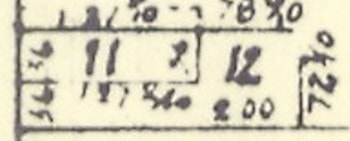
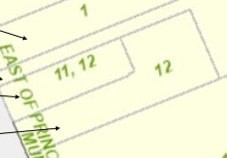
As we can see in this segment of the 1866 Brighton Plan, we are dealing with Lot 12 which was the same width as lot 11 on Prince Edward Street, but extended east, well past lot 11, and encompasses the land behind lot 11.
As we can see in this segment of the 1866 Brighton Plan, we are dealing with Lot 12 which was the same width as lot 11 on Prince Edward Street, but extended east, well past lot 11, and encompasses the land behind lot 11.
This was part of the Singleton land holdings until 1865 when lot 12 was sold by Leonora E. Singleton to Nicholas H. Peterson. Leonora Emily Singleton (1822-1909) was the unmarried daughter of John Singleton and Margaret Canniff. She and her mother engaged in land exchanges which cover many different properties on the east side of Brighton. In this case, Leonora had acquired land from her mother which the records say “included this lot”, meaning lot 12.
Nicholas H. Peterson may be a farmer in Ameliasburgh Township, although his middle initial is consistently A and not H. In any case, he sold lot 12 in 1873 to Ira B. Thayer and he sold it a year later to his brother-in-law, James E. Solomon. At the same time, James Solomon sold it to Alice Thayer who was Ira’s wife. These are the folks who had the thriving nursery business on Prince Edward Street across from the Methodist Church, now Trinity St. Andrew’s United Church.
An interesting turn of events comes about two years later when the two couples, Ira and Alice Thayer and James Solomon and wife sold lot 12 to Frederick W. Auston and Henry Auston. Frederick William Auston (1847-1923) was born in Cobourg, the son of Dr. James Auston and Frances Boyer. His father was a surgeon in Cobourg although he died in 1862. Frederick and his brother Lucien moved to Brighton in the early1870s and were engaged in real estate speculation.
There are also several examples of these two, Frederick and Henry Auston, partnering in the development of properties in Brighton. There are no Henry Auston names in Frederick’s family but Henry Auston may be Henry Abert Auston (1841-1915) who was the son of William Owston and Orillia Soper. Note the spelling of the surname. It is not clear how these two men might be related.
On the other hand, one thing is very clear. It was not until 1901 that Frederick and Henry Auston sold lot 12. That means they held it from 1876 to 1901, which amounts to 25 years. Records suggest that there was a hotel on this property in 1884 operated by Grimmond McDonald and Captain John Covell. It would appear as if they leased the property from the Auston men who still owned it. Mr. McDonald died in 1896 and we see that the building currently on lot 12 was built in 1897, probably by Frederick Auston.
Nicholas H. Peterson may be a farmer in Ameliasburgh Township, although his middle initial is consistently A and not H. In any case, he sold lot 12 in 1873 to Ira B. Thayer and he sold it a year later to his brother-in-law, James E. Solomon. At the same time, James Solomon sold it to Alice Thayer who was Ira’s wife. These are the folks who had the thriving nursery business on Prince Edward Street across from the Methodist Church, now Trinity St. Andrew’s United Church.
An interesting turn of events comes about two years later when the two couples, Ira and Alice Thayer and James Solomon and wife sold lot 12 to Frederick W. Auston and Henry Auston. Frederick William Auston (1847-1923) was born in Cobourg, the son of Dr. James Auston and Frances Boyer. His father was a surgeon in Cobourg although he died in 1862. Frederick and his brother Lucien moved to Brighton in the early1870s and were engaged in real estate speculation.
There are also several examples of these two, Frederick and Henry Auston, partnering in the development of properties in Brighton. There are no Henry Auston names in Frederick’s family but Henry Auston may be Henry Abert Auston (1841-1915) who was the son of William Owston and Orillia Soper. Note the spelling of the surname. It is not clear how these two men might be related.
On the other hand, one thing is very clear. It was not until 1901 that Frederick and Henry Auston sold lot 12. That means they held it from 1876 to 1901, which amounts to 25 years. Records suggest that there was a hotel on this property in 1884 operated by Grimmond McDonald and Captain John Covell. It would appear as if they leased the property from the Auston men who still owned it. Mr. McDonald died in 1896 and we see that the building currently on lot 12 was built in 1897, probably by Frederick Auston.
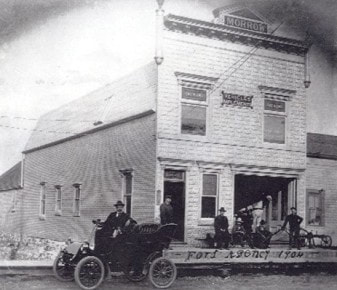
Finally, on November 12, 1901, Frederick and Henry Auston sold lot 12 to Oscar L. Morrow. Oscar Leonard Morrow (1879-1956) was born on the family farm at Concession 4, Lot 3, Brighton Township, near Hilton, a son of James Harcla Morrow and Irena Alzina Wade. His father moved the family to Brighton in the mid-1880s and was described in census records as a manufacture’s agent. Oscar was the oldest child and would participate directly with his father in the business of selling farm implements and those new-fangled motorized carriages.
The transaction in 1901 resulted in Oscar L. Morrow owning lot 12 on Prince Edward Street in Brighton. The building that was there, built in 1897, became known as the Morrow Block. Records suggest that James H. Morrow and his son Oscar set up a farm implements dealership at this location soon after purchasing the property. The dates given in the “History of Brighton Businesses” for Morrow farm implements are 1903 to 1907. Early in the business, the product called “carriages” was added.
This picture at of the Morrow Block from 1905 shows one of those “carriages” out front as well as a plow. The name “Morrow” is very evident at the top of the building looking out onto Prince Edward Street.
The transaction in 1901 resulted in Oscar L. Morrow owning lot 12 on Prince Edward Street in Brighton. The building that was there, built in 1897, became known as the Morrow Block. Records suggest that James H. Morrow and his son Oscar set up a farm implements dealership at this location soon after purchasing the property. The dates given in the “History of Brighton Businesses” for Morrow farm implements are 1903 to 1907. Early in the business, the product called “carriages” was added.
This picture at of the Morrow Block from 1905 shows one of those “carriages” out front as well as a plow. The name “Morrow” is very evident at the top of the building looking out onto Prince Edward Street.
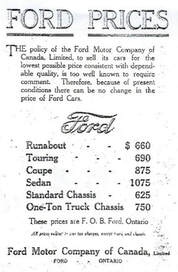
In fact, the Morrow Block housed the first Ford dealership between Bowmanville and Gananoque. New Ford automobiles were delivered by train, with several cars rolled onto standard box cars. In 1913, the Morrows built a car unloading shed beside the Grant Trunk Railway station so that the new cars destined for this area could be rolled directly out the side door of the box cars, into the car shed. Then, the cars could be rolled down the ramp and taken to whatever dealer in the area had ordered the car. This only lasted a few years because other train stations along the line got into the act, providing their own unloading facility so they did not have to retrieve their cars from Brighton. Eventually, the railways built purpose-built car carrying rail cars which removed the need for a separate unloading facility in each town.
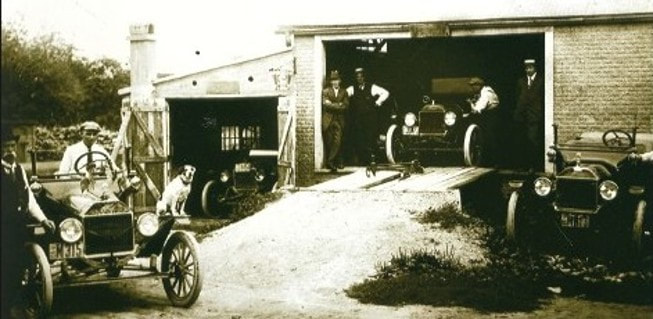
The picture at left was taken in 1915 at the rear of the Morrow Block. The proprietor, Oscar L. Morrow, stands just inside the shop door at far right. The fellow driving the car at far left was Wade Harcla Morrow, Oscar’s younger brother. Apparently, he had a well-trained dog who liked to ride on the front fender.
The picture at left was taken in 1915 at the rear of the Morrow Block. The proprietor, Oscar L. Morrow, stands just inside the shop door at far right. The fellow driving the car at far left was Wade Harcla Morrow, Oscar’s younger brother. Apparently, he had a well-trained dog who liked to ride on the front fender.
James Harcla Morrow died in 1917 and Oscar L. Morrow maintained ownership of lot 12 for many years. The situation is confused by the fact that many different businesses had offices in this building over the years, renting or leasing space from the Morrows. There was an office in the Morrow Block for the Hartford Fire Insurance agency. James McCracken was an agent for Massey Ferguson and Frost fences were sold here as well. The Morrow brothers had a Maxwell car dealership here from 1921 to 1925. Ed Solomon Insurance was here from 1934 to 1949.
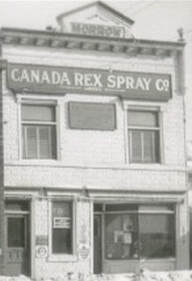
Wade H. Morrow, Oscar’s brother, worked for the Rex Spray Company which had its office in the Morrow Block from 1919 to 1965. This picture, taken about 1950, shows the sign “Canada Rex Spray Co.” on the front of the Morrow Block.
We can also be confused by several transactions in the land records which appear to show that the Morrows sold lot 12. However, one very important transaction dated April 22 1981 makes it clear that the others were for small bits of land and rights of way acquired by owners of lot 11.
The grantor for the 1981 transaction is the estate of Oscar L. Morrow who had passed away in 1956. The executors of the estate were his wife, Elma and his son James H. Morrow. They sold lot 12 to Douglas and Catherine Galt.
We can also be confused by several transactions in the land records which appear to show that the Morrows sold lot 12. However, one very important transaction dated April 22 1981 makes it clear that the others were for small bits of land and rights of way acquired by owners of lot 11.
The grantor for the 1981 transaction is the estate of Oscar L. Morrow who had passed away in 1956. The executors of the estate were his wife, Elma and his son James H. Morrow. They sold lot 12 to Douglas and Catherine Galt.
The most important part of this transaction is the description which is one of those detailed and tedious blocks of text that sketch out the land dealt with by this transaction. Here is the text, cleaned up a bit for clarity:
“Part commencing at south west angle lot 12; northerly 23.125 feet; easterly 60 feet; northerly 10 inches to south east angle lot 11; easterly 4 feet; northerly 24 feet; easterly 48 feet to north east angle of lot 12; southerly 48 feet to south east angle of lot 12’ westerly 132 feet to point of commencement”
If you follow this series of instructions, you will find that it defines perfectly lot 12 as we see in this segment of a map recently downloaded from OnLand.ca. This is the full complement of lot 12. Considering this, we can say that the other transactions are for small pieces that are related to the owners of lot 11 and not material in our understanding of lot 12.
“Part commencing at south west angle lot 12; northerly 23.125 feet; easterly 60 feet; northerly 10 inches to south east angle lot 11; easterly 4 feet; northerly 24 feet; easterly 48 feet to north east angle of lot 12; southerly 48 feet to south east angle of lot 12’ westerly 132 feet to point of commencement”
If you follow this series of instructions, you will find that it defines perfectly lot 12 as we see in this segment of a map recently downloaded from OnLand.ca. This is the full complement of lot 12. Considering this, we can say that the other transactions are for small pieces that are related to the owners of lot 11 and not material in our understanding of lot 12.
For a few years in the 1970s, Joe Banbury had his law office here, before moving across the street. G. B. Allen Insurance was here from 1978 to 1982 before moving to 111 Main Street. Two doctors were at the front of the building from 1982 to 1988, then it was Community Care, then Brighton Office Supplies, Aqua Water, Northumberland Pedorthic Services and, in 2005, Heritage Jewellers.
As of this writing in 2025, the Clothing Depot is established at 23 Prince Edward Street. The Morrow Block remains, much the same as it did when it was a Ford dealership in the early 1900s. There have been scares of development that might eliminate the old structure, but nothing has come of all the talk. The Morrow Block is still an old friend that we greet as we walk in downtown or drive through. May it remain so.
As of this writing in 2025, the Clothing Depot is established at 23 Prince Edward Street. The Morrow Block remains, much the same as it did when it was a Ford dealership in the early 1900s. There have been scares of development that might eliminate the old structure, but nothing has come of all the talk. The Morrow Block is still an old friend that we greet as we walk in downtown or drive through. May it remain so.